Eileen’s story: “Nurse support helped me make decisions about my treatment”
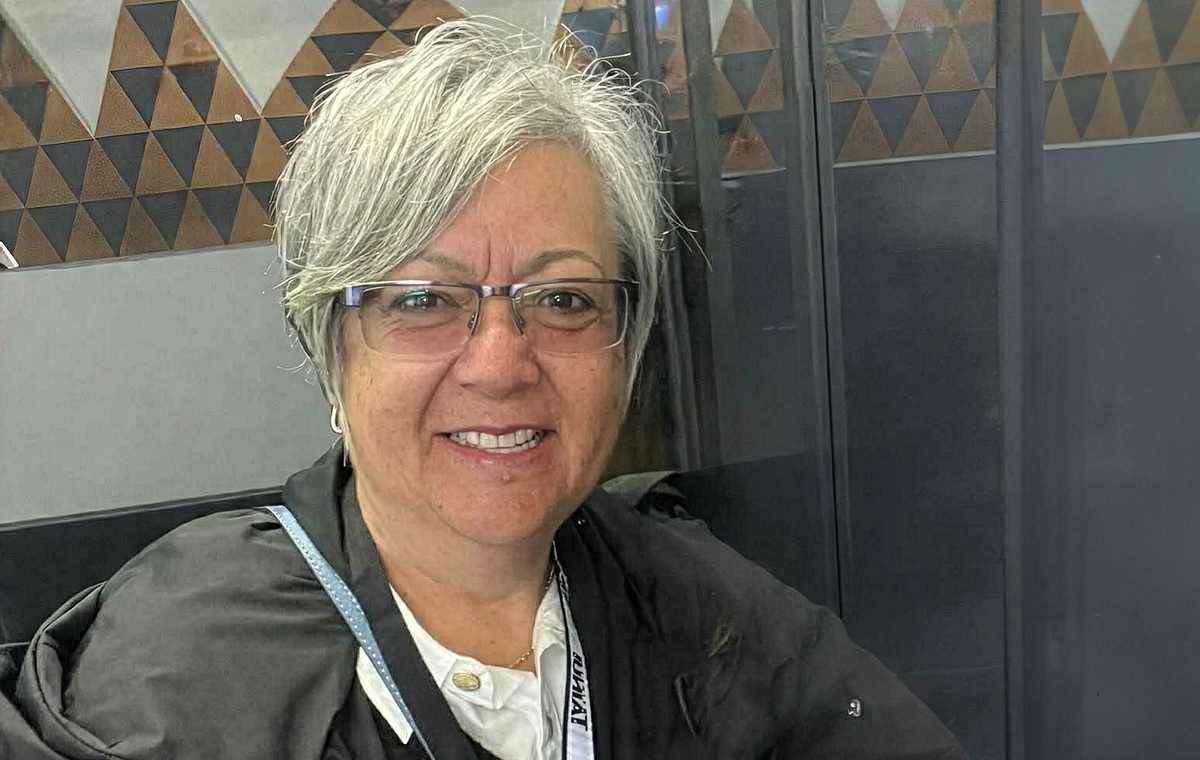
Eileen was 59 when she was diagnosed with breast cancer in December 2022. She had noticed a change to the normal look and feel of her breasts and mentioned it to her GP. Having had a clear mammogram one year prior, that one action led to an early diagnosis. She’s sharing her story to remind women to talk to health professionals – including Breast Cancer Foundation NZ nurse specialists – if they have questions about changes to their breasts or their treatment.
Late 2022, I was moving house – everything was upside-down. One afternoon I was out in the garden pulling weeds in a mad rush to get the place tidy. About a week later I noticed a little discharge from my nipple. I thought I must have scratched the skin or maybe got some dirt in my bra. When it stopped after a couple of weeks, I honestly didn’t give it another thought.
A short time after that I took my moko to the doctor for an eye infection. As we were leaving, I just mentioned – almost as an afterthought – “Oh, I had a bit of discharge a while back, but it’s gone now, it’s fine.” I was ready to walk out the door.
I am so grateful my GP stopped me. He said, “No, hang on, we need to look into this properly.” He sent me for a repeat mammogram and an ultrasound even though I’d only had a clear one the year before.
The mammogram looked okay – I’ve always had dense fibrous tissue – the ultrasound too showed dense tissue. They did a biopsy, just to be sure.
I wasn’t worried. All my previous mammograms had been fine, so I thought it would be nothing.
Then the call came: ductal carcinoma in situ – DCIS. An MRI was done to plan surgery, and what they first thought was about 2 cm turned out to be more than 12 cm. The same scan also found a separate small invasive cancer, only 8 mm, but it was HER2-positive.
In early 2023 I had a mastectomy and lymph nodes checked – thankfully the nodes were clear. Because of the invasive part, the team recommended chemotherapy and Herceptin.
The hardest decision of my whole journey was whether to go through chemotherapy. My surgeon was confident she’d achieved good margins and removed all the cancer, so I was unsure whether to take that option. I’d heard some tough stories from friends who had chemo, and I wasn’t convinced.
I rang Louise, one of the Breast Cancer Foundation nurses. She explained the pros and cons, that chemotherapy could improve my survival chance by around 10%. My own mum had passed away from cancer at 53 – she never got to meet my kids. When I thought about my moko, I knew I had to do it.
Louise was amazing, answered every question and supported me through the whole journey.
Chemo was tough. I lost my hair, I was sick, I was physically drained – but I got through it. And today I’m back at work and feeling great.
I’m grateful every day that I mentioned it to my GP. I have reflected on that visit with him: what if I hadn’t mentioned it? That conversation quite literally changed my life.

"So, to every wahine listening please don’t feel whakamā. Don’t brush things off. Even those of us who work in health can convince ourselves it’s nothing. You know your body. If something isn’t normal for you, even if it seems small or it’s gone away, please speak up and get it checked.
It’s just a conversation with your doctor, but it might save your life. It saved mine."
Share your story
Have you been touched by breast cancer and would like to share your story? We’d love to hear more about it.